|
- Gift Certificates Available Now!
- From The Executive Director's Desk
- Latin Names for Gardeners
- Introducing our newest Board Members
- Feeds ‘n Needs Dog Photo Contest
- Food Forest Overview
- Our Little Poetry Free Library
- Summer Students at the Fredericton Botanic Garden
- New in the Garden – Weather Monitoring Station
- The FBGA in The News
- Upcoming Events
- Host Your Event at The Garden
- Crossword
- FBGA Information
- Crossword Answers
|
|
|---|
|
Gift Certificates Available |
|
|---|
|
Gift certificates are now available in print and digital form. This is a great way to support the Garden and is a thoughtful gift for the gardener in your life. Visit https://fbga-plant-sale.square.site/ or phone (506) 452-9269 to purchase. |
|
|---|
|
|
From The Executive Director's Desk
By Linda Stephenson |
|
|---|
|
Hello, Gardeners!
What an amazing few months it has been since my last newsletter column! Our Support a Student campaign was a resounding success, raising just over $17,000 against a $15,000 goal! We were elated, and more than a bit emotional. Thank you.
Spring and summer brought the return of some familiar faces and the addition of some new ones, on the staff front. As I think most of you are aware, our new Head Gardener, Mujin Lee, joined the team this spring. Mujin was joined by three summer interns: Eryn Trevors, who was back for a fourth year, Lucy Dunphy, who returned to the Garden after a hiatus of a few years, and newcomer, Ben MacIntosh. What a great and energetic group of young people!
Inside the Resource Centre, Jazz Timmermans returned for their second year, performing all manner of administrative, financial, technical, and plant sale related functions, to help our summer go more smoothly. Also joining us was Sristhi Chopra, a Business Admin student from UNB. Sristhi blossomed almost immediately and has been instrumental in raising awareness of the Garden through mainstream and social media, in-kind donation solicitations, event planning, and general outreach. We have our fingers crossed that we may be able to keep Sristhi into the fall, through a co-op arrangement with UNB.
The first full week in May we marked Red Dress Day, at the Memorial Bench dedicated to Missing and Murdered Indigenous Women, Girls and 2S (surrounded by red flowers, lovingly planted by Jim Goltz), had a raised garden bed building event, and two days of volunteer clean-up (the Garden, not the volunteers). The second week held two days of willow basket making workshops.
The third week of May started with a workshop on building willow fences, and the next day, one on Harlequin tree design. Next was a Grade One Picnic, for 42 students. Talk about a lot of questions (and a strong wish that we had more than one washroom). It was also the week of the Annual Spring Plant Sale, with online sales running Tuesday through Thursday, then moving to in person sales for Saturday and Sunday. There was also a volunteer willow fence building event in the Food Forest that Saturday. Thank goodness we have name tags, because we weren’t sure who we were by the end of that week!
The last week of May was lonely in the Resource Centre, as Erin MacQuarrie spent the week in Truro, at Master Gardener Field School. Erin is a Master Gardener in Training and is being encouraged every step of the way by Certified Master Gardener Heather Connors-Dunphy.
June started fairly quietly, with lots of administrative tasks and meetings, with Weeding Wednesdays being the only activities occurring, for the first couple of weeks. By mid-June, the Garden was humming again (with people and pollinators)! We had two enthusiastic and energetic work crews helping out, as part of the annual Stantec in the Community events. We’re quite flattered that for the past few years, the Garden has been the volunteering venue of choice for so many Stantec employees, that we have hosted two workdays, rather than the traditional one.
Bard in the Barracks gave three performances of Macbeth in the Garden, Heather Connors-Dunphy taught a shade container workshop, and the war against weeds was waged on Wednesday.
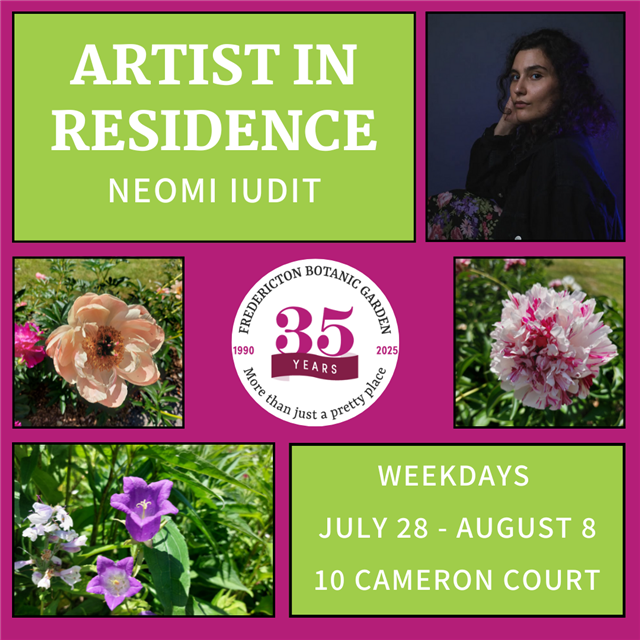
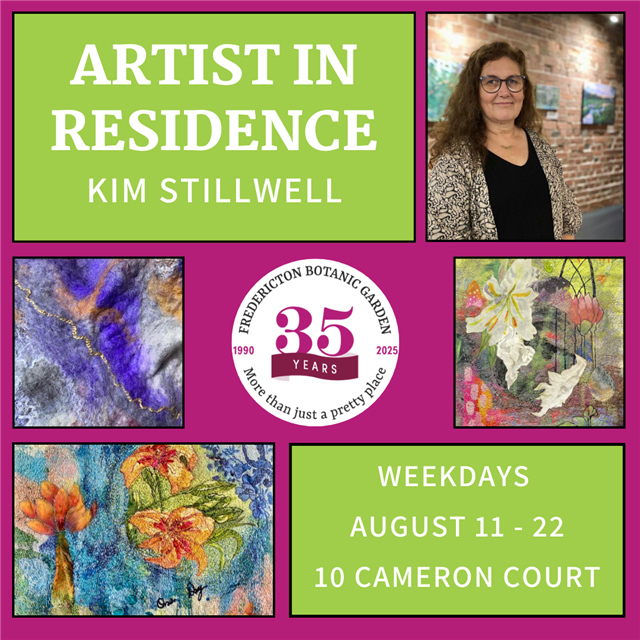
June ended with continuing performances of Macbeth, another Weedy Wednesday, and the arrival of our first Artist in Residence. This week also saw pick-ups and deliveries of product from our first rain barrel and composter sale, organized by our Treasurer, Julie Wright.
July is almost over and has been a full month with the final performances by Bard in the Barracks –
Botanic Style, Weeding Wednesdays, when the weather permitted, and two partnership events with the New Brunswick Invasive Species Council. The latter were very well attended and it’s encouraging to see increased interest in banishing (ha!) these intruders from our Gardens.
Our first ever Community Connect event was held, with crocheters and knitters invited to gather at the Resource Centre and take inspiration from the Garden. A tour, led by Mujin, set the stage for some lovely creations.
We were also delighted by the response to our call for volunteers for Paint it Black (painting the gates and kiosk) and Scrub-a-Dub-Dub (washing the memorial benches and the memorial stone). We had volunteers from many generations and made a serious dent to the work that needs to be done.
We’re finalizing our fall and winter calendar for 2025 and exploring new ideas for 2026. If there are workshops or events that you would like to see in the Garden, please drop us a line. We’d love to hear from you. After all, the Fredericton Botanic Garden is more than just a pretty place!
Happy gardening,
Linda Stephenson
Executive Director
|
|
|---|
|
|
Latin Names for Gardeners – Part 3: Who gives a plant its name?
By Stephen Heard |
|
|---|
|
In the first two parts of this series I’ve explained why we use “Latin” names for plants, and why calling them “Latin” names is a bit misleading. Today, a different question: where does a Latin name come from? Who gives a plant its name?
The simple answer is “whoever discovers it” – but like most simple answers, that misses some really interesting detail. What does it mean to “discover” a plant? Many of us have a mental image of a valiant explorer (probably a white European male) hacking his way through the jungle, holding up a strange new plant in triumph. That’s not
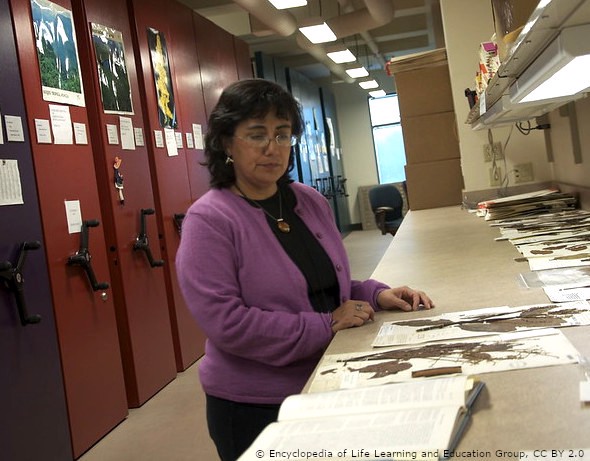
completely wrong; it has sometimes happened that way. But far more often, the realization that a specimen represents a previously undiscovered plant species is made by a taxonomist working from dried specimens in a university, museum, or botanic garden – a taxonomist like Dr. Carmen Ulloa Ulloa, pictured below working in the herbarium of the Missouri Botanic Garden. (Here at the Fredericton Botanic Garden, by the way, we dream of one day being big enough to have a herbarium, and taxonomists working in it.)
There are two ways a new species might be “discovered”. First, a plant specimen might be obviously different from any plant that’s been scientifically described and named before. This is still common when botanists collect plants in Earth’s more remote and more biodiverse regions – it’s really quite astonishing how spottily we understand the diversity of life on our planet. But there’s another common case, too: a taxonomist surveying many specimens of a previously named “species” might realize that in fact, they represent more than one different kind of plant. Then the “species” must be split in two, with some specimens retaining the old name and another set recognized as a new species with a new name. This happens often, even in familiar groups if they tend to have subtle differences among species – as is true, for example, of North American goldenrods. Of course, in either case, by “discovered” we mean that a plant species is newly recognized by
scientists – it may well have been known for a long time to the people who live where it’s found, and they may have a common name for it. It’s the Latin name, and scientific treatment, that’s new.
Once we’ve realized that a plant species is new to science, it can (and should!) be given a name. Almost always, the discoverer (or team of discoverers) does this. They choose a name, and publish a paper announcing it – usually, although not necessarily, in a scientific journal. The paper will describe the species, and in particular describe how it differs from other related species (this technical description is called a “diagnosis”). Implicit in that is knowing what those other related species are – that is, having at least a hypothesis about where the new species fits into the family tree of all plants on Earth. So, for example, the discoverer might argue that the new species they’ve discovered is a relative of yams, and assign it to the yam genus
Dioscorea (along with about 600 other species native to tropics around the world). They might choose to name it
Dioscorea rubiflora (if it has red flowers), or
Dioscorea saxicola (if it grows among rocks – Latin “saxum” = rock and “cola” = dweller), or
Dioscorea ugandensis (if it was collected from Uganda), or even
Dioscorea heardii (if they wanted to make me very, very happy). I’ll say more about those kinds of choices in future instalments of this series.
About 380,000 species of plants have been named this way over the last 275 years. Why 275? Because modern plant taxonomy can be traced back to the work of the Swedish botanist Carl Linnaeus, and in particular his 1753 book
Species Plantarum. A plant species’ “correct” Latin name is the first one it was given, and so we still use the names Linnaeus gave 5,940 plant species in that book – among them
Acer rubrum (red maple),
Helianthus giganteus (giant sunflower), and
Rosa gallica (French rose). In fact, you’ll often see Latin names written to indicate the botanist who coined them:
Acer rubrum L., for example, where the “L.” is a conventional shortening of “Linnaeus” to spare us spelling it out over and over again. This part of the name is the “authority”, and it’s useful because occasionally (and accidentally) two different botanists will try to assign the same name to different plants! Only one of those can be correct, but including the authority removes ambiguity.
If you’re curious about who named your favourite plant, Wikipedia is extremely useful; a box at the right of most plant species entries indicates the name and its authority along with details of the plant’s botanical classification. Starting there, you can even (with a bit of library work), track down and read the paper that conferred the name. That might not sound tremendously exciting, but often the paper will explain
why the namers chose the name they did. I promise you, there are fascinating stories behind many Latin names. Catch me at a party one day and I’ll tell you some of them – at least until you make me stop.
|
|
|---|
|
Image: Plant taxonomist Dr. Carmen Ulloa Ulloa, at work in the herbarium at the Missouri Botanic Garden. © Encyclopedia of Life Learning and Education Group, CC BY 2.0, via
flickr.com
. |
|
|---|
|
|
Introducing our newest Board members! |
|
|---|
|
At the AGM, the Fredericton Botanic Garden welcomed in two new individuals to the Board of Director; we wanted to give them the chance to introduce themselves.
Mark Hazlett
Mark Hazlett retired at the end of 2023 following 30 years of advancement leadership in post-secondary education.
From 2008 to 2023, Mark served as the President/CEO of the Canadian Council for the Advancement of Education (CCAE). During these years, Mark led five strategic planning exercises, was instrumental in growing membership and education program participation, and brought to fruition CCAE’s human resources growth (from 1 to 3 full-time staff).
A major accomplishment from Mark’s tenure is the CASE Insights on Philanthropy (Canada) with CCAE. This survey of post-secondary advancement work is now entering its 8th year and serves as a strong piece of sector benchmark research.
CCAE recognized Mark’s years of service with the 2024 CCAE Outstanding Achievement Award.
In Fall 2024, Mark joined as the instructor of the very 1st course (Non-Profit Organizations and Governance) with the Wesley Armour School of Business at the NBCC. This 2-year graduate certificate program in Non-Profit Leadership will empower learners with the knowledge, skills, and understanding of the sector and provide the enhanced training to advance into senior management and executive roles within non-profit organizations.
Mark has served on a few New Brunswick based Boards of Directors over his 23 years in Fredericton – Basketball New Brunswick (2007-2011), Fredericton Golf Club (2019-2020), and the YMCA of Fredericton (2019-2024)
An avid gardener, Mark enjoys the evolution of the garden from Spring to Winter and the continuous changing of colours (remember green is a colour!). He looks forward to working with others around the Fredericton Botanic Garden Association Board table.
|
|
|---|
|
Ainslee MacMillan
Ainslee is an environmental educator based in Fredericton, New Brunswick. She works as the Program Manager at The Gaia Project to empower students through environmental education and climate action. Ainslee began working with The Gaia Project in 2019 after completing a Bachelor of Science in Environment and Natural Resources from the University of New Brunswick. She combines academic knowledge with a deep personal commitment to sustainability.
Ainslee is especially passionate about engaging youth in meaningful climate conversations and helping them discover their role in building a more resilient, green future—whether through classroom programs, hands-on activities, or community initiatives. Her work focuses on making climate education accessible, inspiring, and action-oriented.
As someone with a deep appreciation for the natural world, and a passion for spending time immersed in it, much of Ainslee's free time is spent outside, whether in her garden, hiking through her family's woodlot, or spending time kayaking on the Wolastoq River.
As a native Frederictonian, Ainslee is looking forward to getting more involved in the community, and connecting with more like-minded people through the Fredericton Botanic Garden!
|
|
|---|
|
Feeds 'n Needs Dog Photo Contest |
|
|---|
|
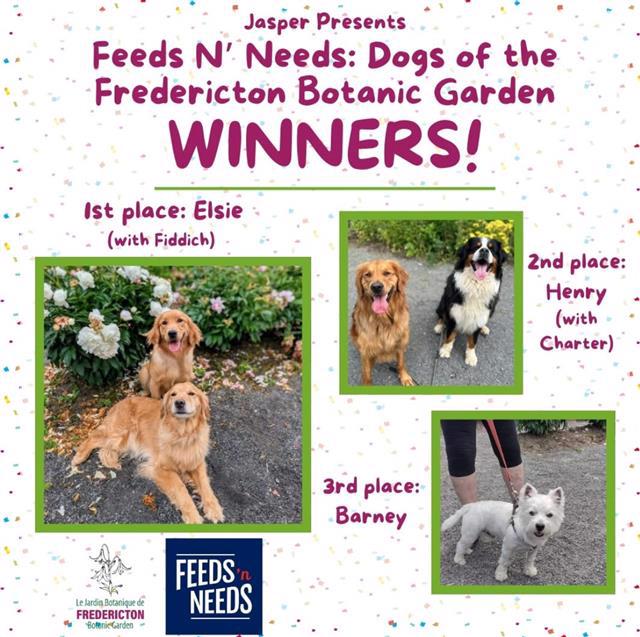
The Feeds ‘n Needs Dog Photo Contest Returns This August!
We’re excited to share that the Feeds ‘n Needs: Dogs of the Fredericton Botanic Garden photo contest will be back this August!
Last year’s contest brought in some absolutely adorable entries, and we’re looking forward to seeing even more furry faces this time around. Participants will be asked to share photos of their dogs enjoying the garden — and yes, there will be prizes!
Keep an eye on our Facebook page — full contest details and how to enter will be announced there soon!
|
|
|---|
|
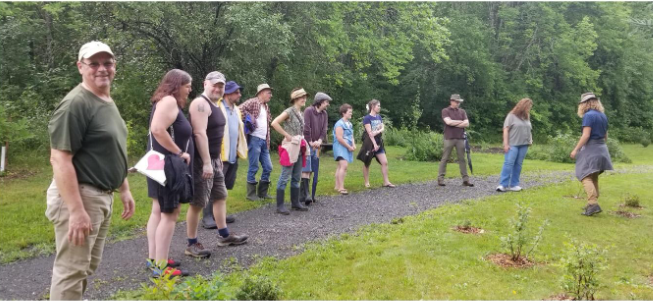
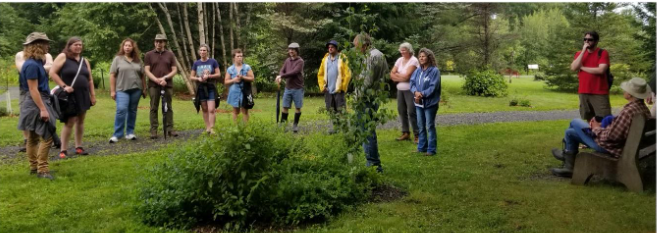
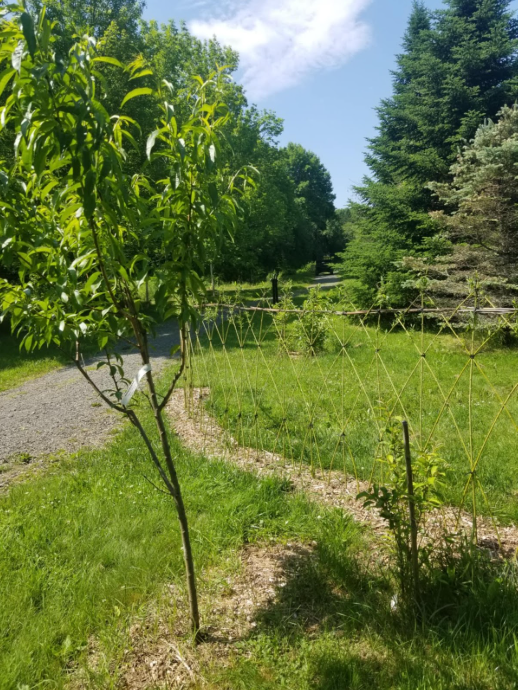
The Botanic Garden’s food forest is yet again taking part in the NB Food Forest Tours. This year, the tour at the site will be on August 30. Come join us for a guided walk through the site, where we’ll tell you about the history of the project, the various successes and fails, and will highlight different sections – from herbs, fruit, and berries in season to the wonderful living willow fences that were constructed this past spring. To register, click here. To read more about food forests in general and the NB Food Forest Tour, click here.
The food forest site in the Fredericton Botanic Garden is ever-evolving. It was started in 2018, when Jim Goltz planted multiple fruit trees in an orchard-style planting. In 2022, the site underwent a permaculture design plan, put together by me and Andrew Mathis (Oasis Farmery, a permaculture education and design company in Fredericton). The overall food forest site now includes several types of food forests – the original orchard-style, a shade food forest, a forest-edge food forest, a berry berm, and a wildlife hedge food forest. All combined, there are over 100 fruit trees and berry bushes, showing the incredible diversity of edible plants that can be grown in the Fredericton climate – from the more familiar apples, pears, plums, cherries, and blueberries, to chestnuts, hazels, hickory, elderberries, peaches, apricots, Cornelian cherries, goji, goumi, spicebush, and many, many others. And of course, they’re mixed with a variety of “support” plants – herbs, edible flowers, nitrogen fixers (plants that provide fertilizer), and ground covers, making for a diverse, productive space.
The main goal of planting different styles of food forests was to showcase the diversity of approaches to growing, in the hopes that each visitor would find something of interest to them. This diversity also provided other benefits:
-
In the forest-edge food forest, the slow-maturing chestnuts were planted under ash trees, which are expected to fail in the next 10 years due to ash borer; when they do, the chestnuts will be large enough that the loss of the ash trees won’t affect the canopy.
-
The berry berm has been incredibly productive and has become a known visiting spot. While the slower-growing fruit trees will take a few more years to start producing, the thriving raspberries and blackberries on the berm provide delicious treats to visitors all summer long, right until the frosts.
-
We’re able to utilize portions of the site that are sub-optimal for regular fruit trees due to shade or wet soil.
What has been producing so far? Of course, the herbs have done tremendously well. There’s a huge abundance of mint, lemon balm, chives, thyme, and many others. The haskaps produce a modest harvest in early spring (they’re still growing!), the black currants are absolutely thriving and loaded with fruit, and of course the berry berm is always there with its loads of raspberries and blackberries. All is freely available for harvest by visitors, but please harvest responsibly and leave some for others!
The food forest is continually growing. This summer, we’ll be adding several peach and apricot trees, a mulberry, an elderberry, and a variety of additional raspberries and blackberries. Do you want to participate? Stay tuned for the work party announcement!
|
|
|---|
|
Picture from the 2024 NB Food Forest Tour, with Andrew Mathis (Oasis Farmery) talking about tree guilds and permaculture design. John Welling (the head gardener in 2024; bottom picture, left) provided insight on the maintenance needs of the site. Picture credit: Sima Usvyatsov. |
|
|---|
|
A peach tree in front of a living willow fence. Picture credit: Sima Usvyatsov
|
|
|---|
|
Little Free Poetry Library |
|
|---|
|
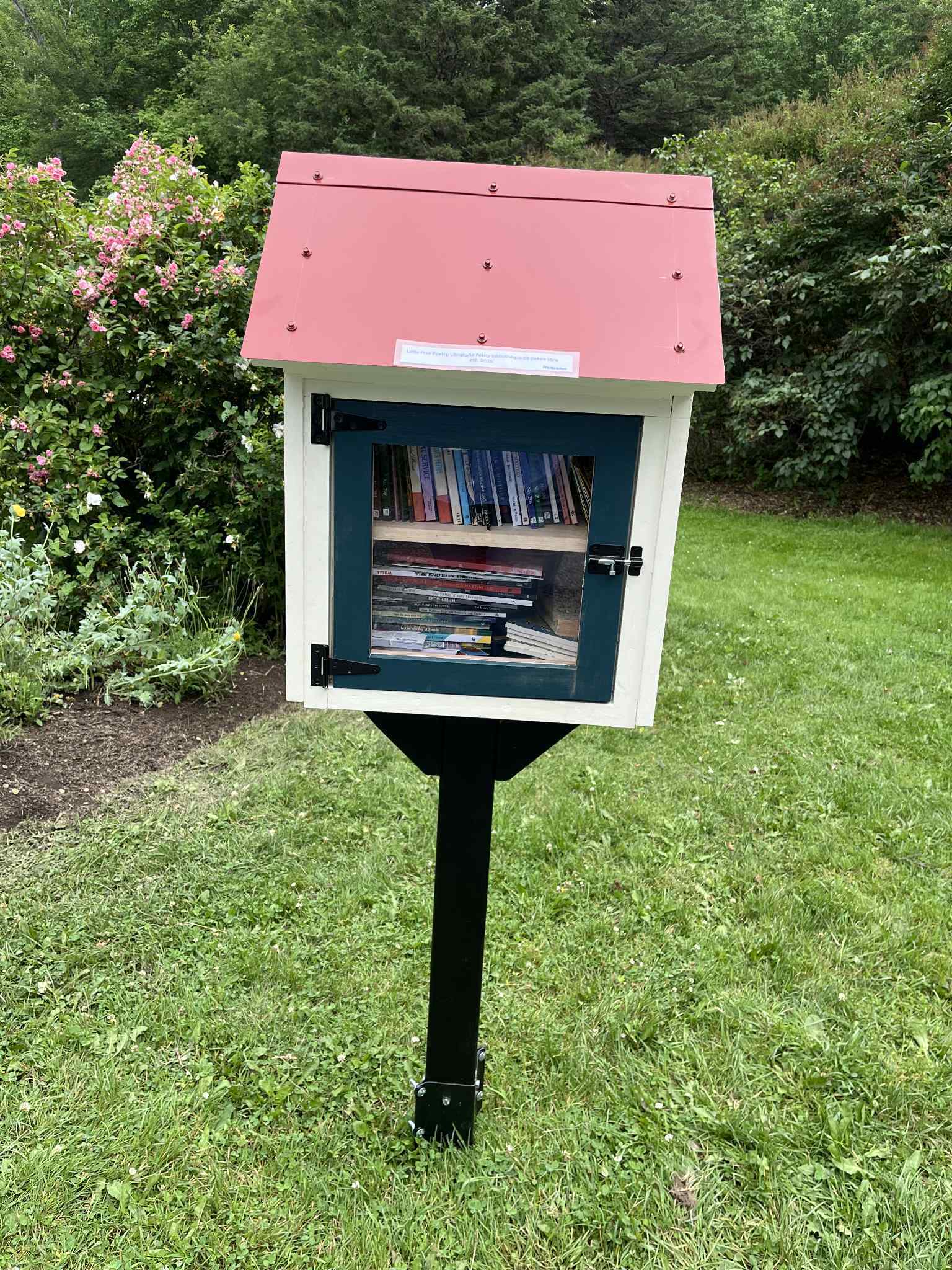
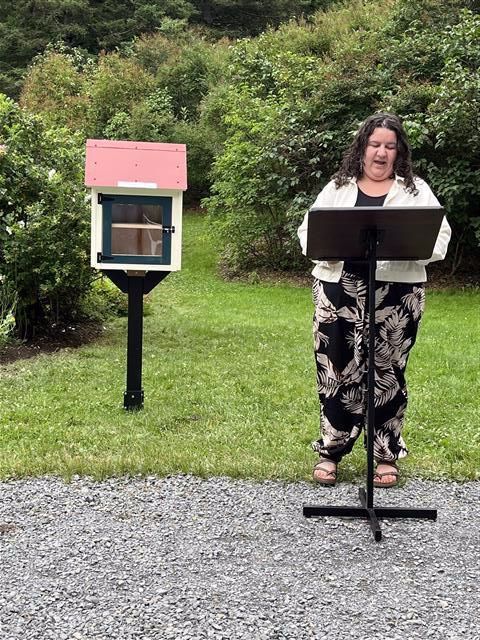
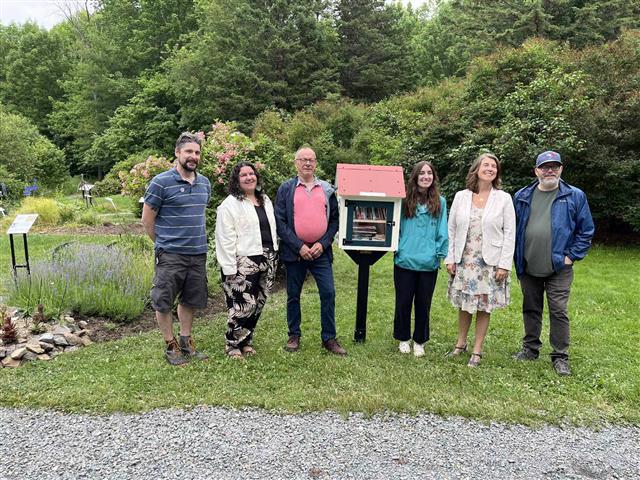
We’re so excited to welcome the Little Free Poetry Library to the Garden: a beautiful initiative led by Fredericton’s Poet Laureate, Fawn Parker. It’s the perfect spot to take a book, leave a book, and enjoy poetry surrounded by nature.
A big thank-you to Vic Dunphy for building this charming little library, and to the City of Fredericton for supporting this meaningful addition to the Literature Garden |
|
|---|
|
Summer Students at the Fredericton Botanic Garden
|
|
|---|
|
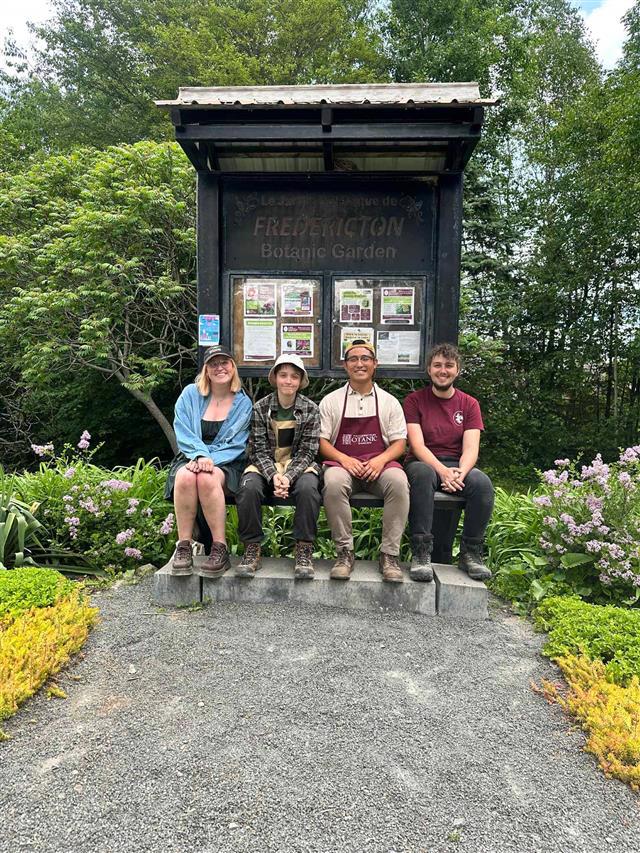
We did it!
Many heartfelt thanks to everyone who donated to our Sponsor a Student campaign! Over $16,500 was donated in just one week and thanks to you, we can now afford to keep our students working for the rest of the summer! Eryn, Lucy, Jazz, and Ben are a crucial part of our Team and the Garden wouldn't be the same without them. Stop by for a visit soon and say 'Hi' if you see them working. |
|
|---|
|
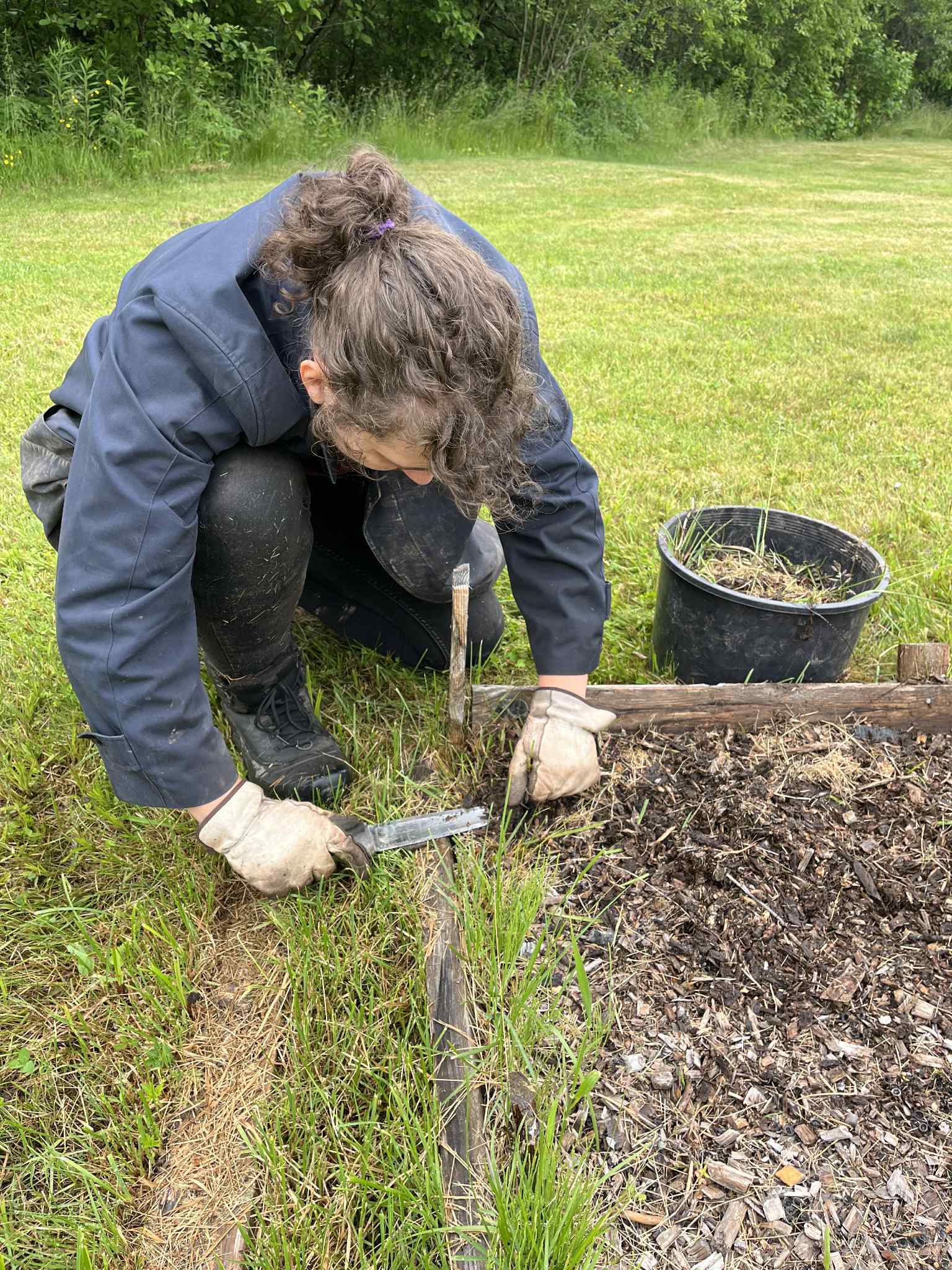
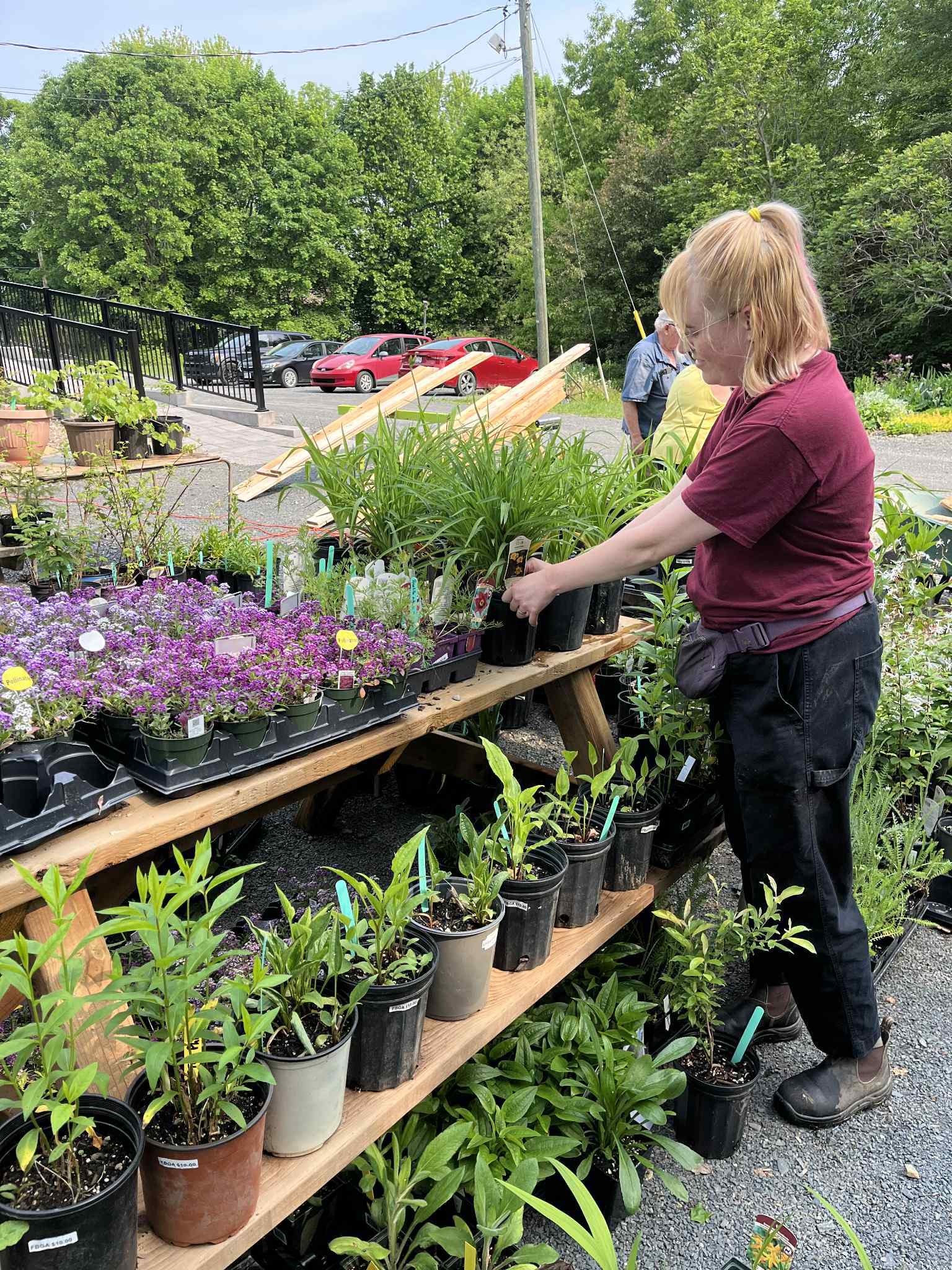
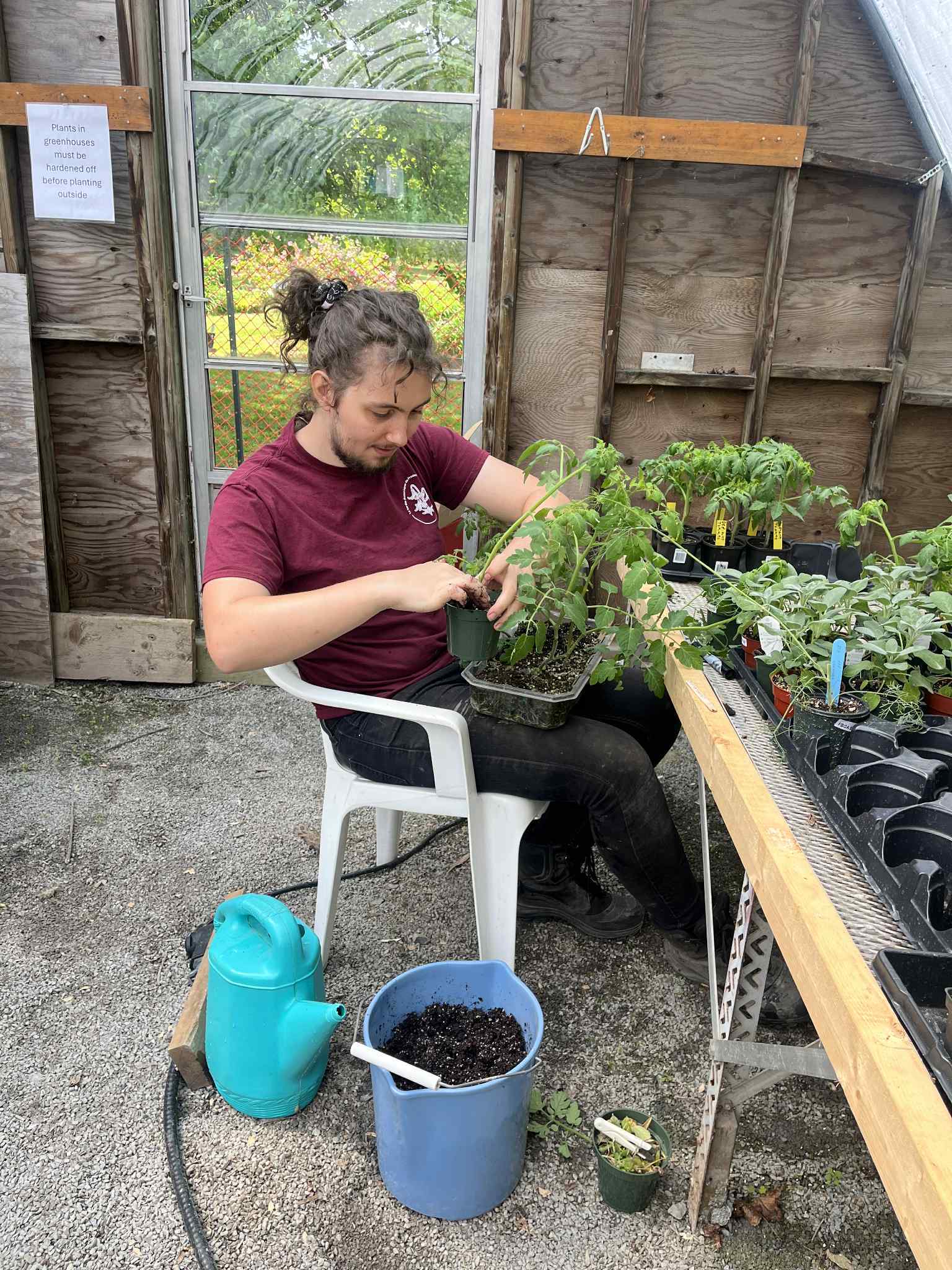
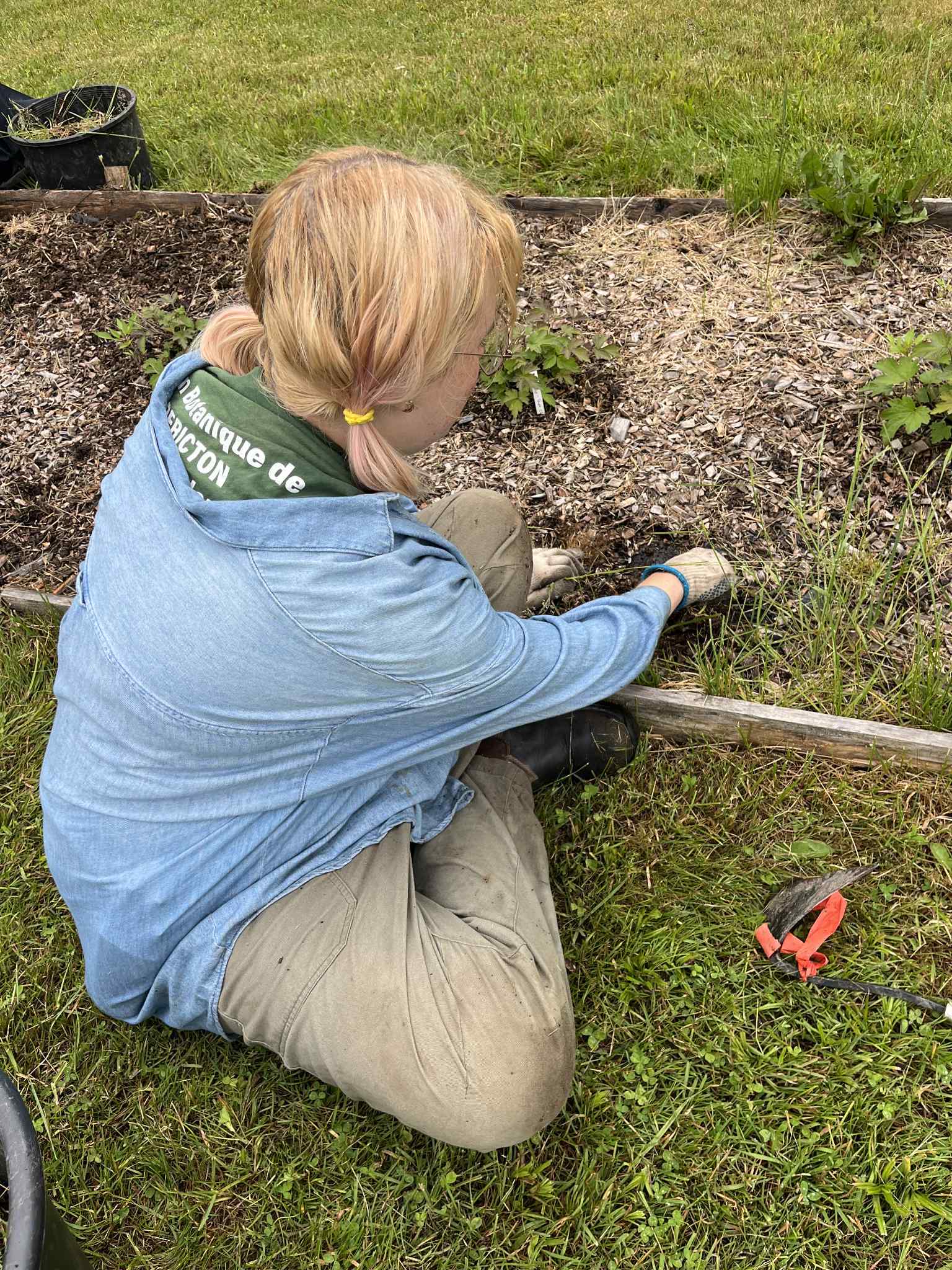
Our summer students have been hard at work over the last few months. Here is a glimpse into a day in the life of a Botanic Garden summer student!
Summer Students in Action
Sristhi is part of the marketing team at the Fredericton Botanic Garden. With a deep love for plants and community spaces, she was drawn to the Garden’s peaceful energy and hands-on approach. She enjoys how no two days are the same from planning workshops to capturing blooming moments for social media.
Ben A. McIntosh (any pronouns) is a recent UNB graduate of Theatre Arts. They have worked outside all their life due to growing up on a farm. Working at the Botanic Garden allows them to work around nature while helping their community.
Jazz is a Knowledge Integration student at the University of Waterloo, and this is their second summer working on the technical side of the Botanic Garden. They enjoy looking around the gardens and learning more about how everything works behind the scenes.
Lucy Dunphy is a UNB Biology-Chemistry graduate with a passion for conservational ecology. First working at the Botanic Gardens in 2019, this is her third summer here. The beautiful nature and positive atmosphere are what keeps her coming back to the gardens.
|
|
|---|
|
2025 Spring Plant Sale Update
|
|
|---|
|
In some ways, it felt as if it was the Annual Spring Plant Sale that would never end! We kicked the event off on May 20th, with two days of exclusive, members-only access. Sales were strong, systems worked smoothly, and most members picked up their orders as arranged. May 22nd we opened online sales up to everyone and again, things ran pretty much like clockwork. The beautiful weather really helped put people in a gardening frame of mind, and online sales were slightly up from 2024.
Saturday, May 24th – day one of the in person plant sale – dawned cool and damp. Our trusty volunteers showed up in rain gear, clutching mugs of coffee, but with the attitude that the show must go on! And on it went, albeit at a much slower pace than that for which we had hoped. We didn’t have the usual line ups at the cash that came with day one, but the silver lining was that we had more time to chat with customers and even recruited some volunteers. Sunday was pretty much a repeat performance, weather and sales wise. The plants in the greenhouses attracted a lot of attention, no doubt because of the shelter provided.
We headed into the Second Chance Plant Sale with feigned optimism. It’s usually pretty quiet on the attendance and sales fronts, and can be managed by a couple of people. Thank goodness we forgot to tell Head Gardener, Mujin Lee, that we wouldn’t need the students scheduled, ‘cause we sure needed them. We were run off our feet. Line ups were long, there was a wait for wagons to take plant orders to vehicles, we repeatedly ran out of change, and our roving plant experts were answering questions and calling out “next.” The cash box was heavy!
Fast forward to the Last Chance Plant Sale, which was quiet, but still resulted in decent sales and new friendships made. It was a rainy day, so most people shopped quickly, but those that came, came to make purchases. Our totals were approaching those of 2024, but we still had some plants left.
Introducing Flower Hour! We put the word out that we were holding a daily plant sale, Monday to Friday, 12:00 – 1:00. The week was a scorcher, but also a success.
Gross sales for the combined online and in person plant sales were $29,068.15, just shy of our goal of $30,000. Net proceeds, which is what really counts, were $21,114.29. All in all, a fun and successful undertaking.
Watch your inbox for the 2025 Spring Plant Sale Survey. Please take a few minutes to complete and return it, so 2026 can be even better!
Many, many thanks to the volunteers who helped every step of the way, from potting up seedlings to tearing down after the plant sales. We could not have done it without you.
A very special thank you to Certified Master Gardener Heather Connors-Dunphy, for not only her oversight of the plant sale, but for her almost daily hands-on contributions to making it work.
|
|
|---|
|
New in the Garden – Weather Monitoring Station |
|
|---|
|
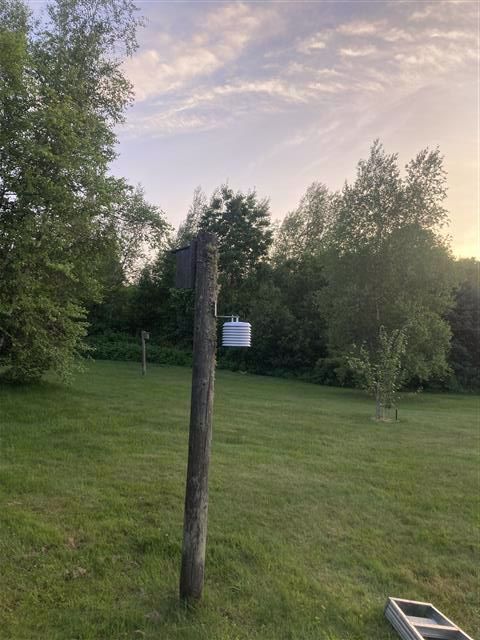
Jordan Ford is a meteorologist with Environment and Climate Change Canada at CFB Gagetown and a part-time MSc student in Environmental Management at the University of New Brunswick in Fredericton. For his thesis, he is studying Fredericton’s microclimates by collecting temperature and humidity data using HOBO MX2301 sensors equipped with radiation shields. These sensors have been strategically placed across the south side of the city, including natural, suburban, and built-up areas.
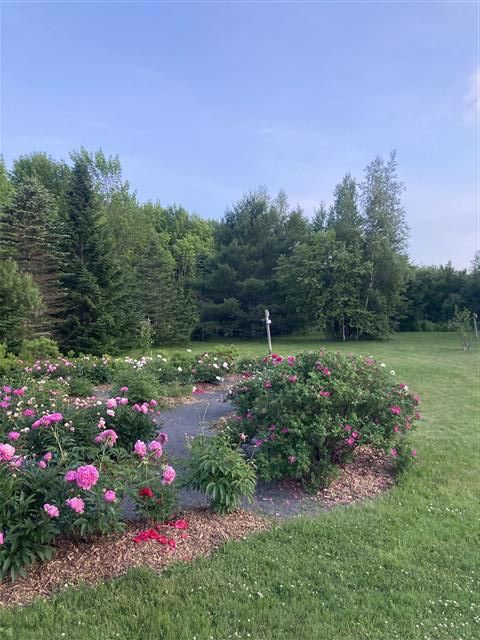
The Botanic Garden provides valuable insight into temperature conditions within a naturalized urban green space; therefore, Jordan has installed equipment near the Peony Garden.
The data collected will be used to develop a fine-scale, AI-driven air temperature model for the city of Fredericton. The goal of this work is to improve the understanding of temperature variability across different land cover types and elevations, as well as to support efficient high-resolution climate and weather modeling for the region.
For more information, contact Jordan at jordanpdford@gmail.com.
|
|
|---|
|
CBC Information Morning
The New Brunswick Literature Garden is one of the most special beds we have in our Botanic Garden – because no other Garden we know of has anything like it. This summer, CBC Information Morning has been airing a weekly series on the Literature Garden – featuring Past Chair Stephen Heard, UNB English professor John Ball, and a selection of the authors honoured in the Garden. Give it a listen!
|
|
|---|
|
Making the most of moths and other unsung heroes of pollination — CBC
Dr. Kaushal Rathnayake spoke with the CBC at the Fredericton Botanic Garden about how moths can be effective pollinators and provided tips on how to encourage the pollination of your garden.
|
|
|---|
|
Food Forest Tour
Hosted by Sima Usvyatsov
August 30, 1:00 pm – 3:00 pm
Are you interested in growing some of your own food? Seeing what other people grow? Or connecting with other food-growers? The 2025 NB Food Forest Tour is now open for registration! Hear what New Brunswickers are growing – from currants, elderberries, and pear to peaches, pawpaws, and figs; learn new techniques or approaches, make new connections, and even buy some items to take home with you! These tours allow you to experience properties across the province – public and private, small and large, well-established food forests and ones planted only 2 years ago.
Tickets are $15.
|
|
|---|
|
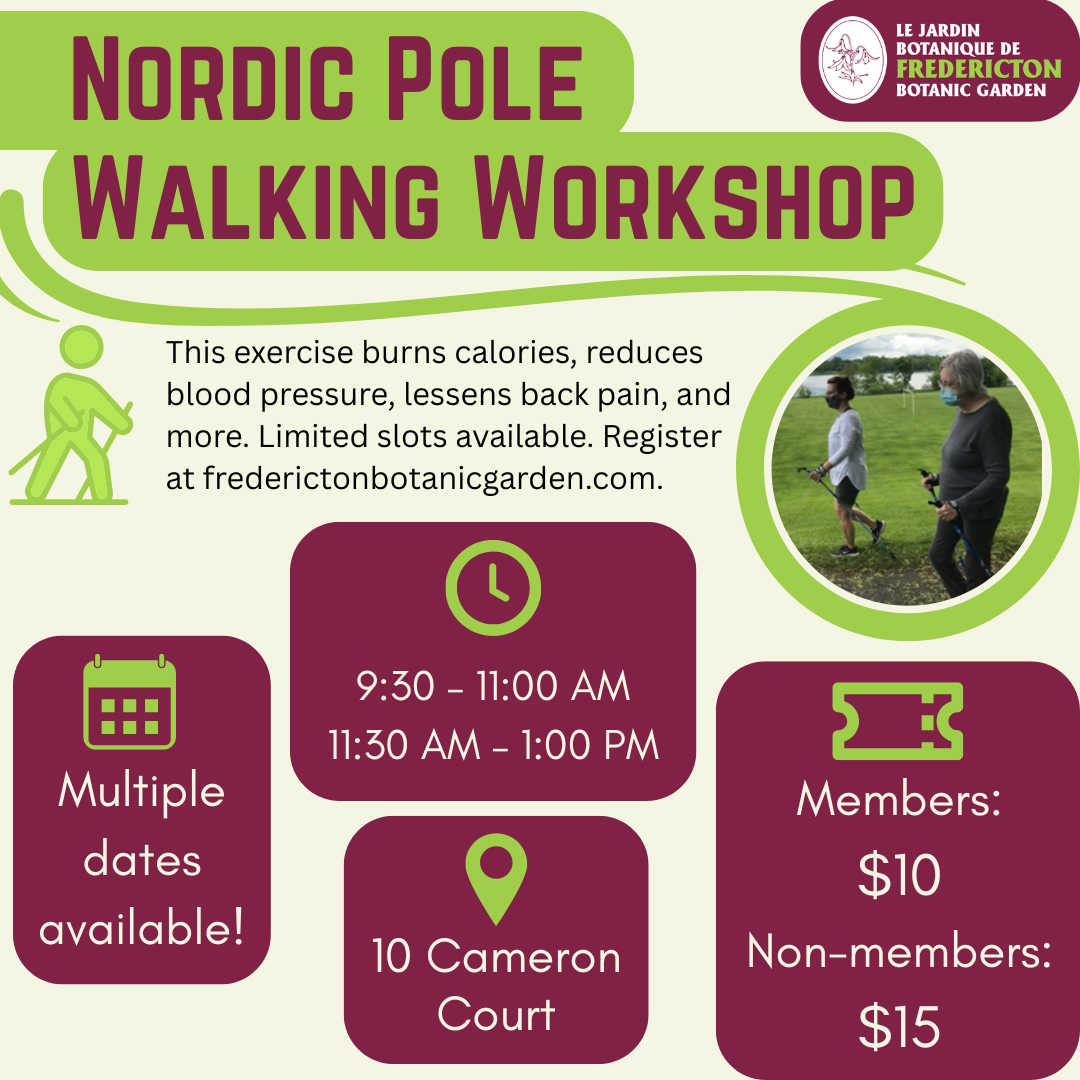
Intro to Nordic Pole Walking
September 6th, 2025. 9:30 am – 11:00 +
Fredericton Botanic Garden Resource Centre 10 Cameron Court, Fredericton, New Brunswick, Canada. Increase your fitness level by learning the fundamentals of Nordic Pole Walking. Using Nordic Poles increases upper body strength and core muscles are used so more calories are burned.
Tickets are $10.00 for members, $15.00 for non-members.
|
|
|---|
|
Host Your Event at the Garden! |
|
|---|
|
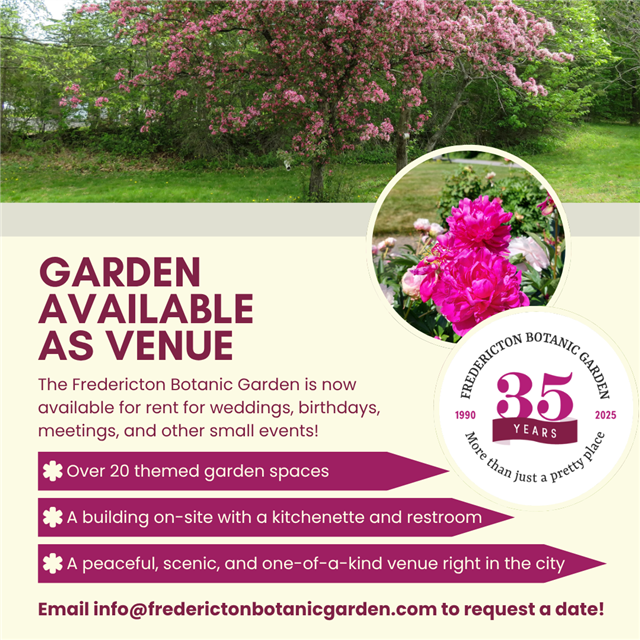
Private Functions at The Garden
The Fredericton Botanic Garden is available to host a variety of private functions. Rates fluctuate depending on the requirements, so please reach out to us at info@frederictonbotanicgarden.com to set up a call or visit to discuss your individual needs.
Weddings
The Garden provides many beautiful locations to exchange your vows. We are happy to recommend a specific area to ensure you are surrounded by abundant blooms.
Starting Rate: $200.00
Includes access to Resource Centre to use washroom facilities, touch up hair and makeup, etc. Allows for limited vehicular access/parking within the Garden (wedding party, those with mobility challenges, etc.).
Photo Sessions – Graduation, Prom, Family, Engagement, Wedding
Although you are welcome to take photographs in the Garden, free of charge, we are happy to provide you with reserved parking and/or vehicular access to a specific area to accommodate long gowns, trains, high heels, babies, photo props, etc.
Starting Rate: $50.00
Includes access to Resource Centre to use washroom facilities, touch up hair and makeup, etc. Wave to the other graduates as you drive by and park in the Garden!
Small Meetings/Workshops
Our wheelchair-accessible Resource Centre has a small common room that can accommodate meetings/workshops/gatherings of no more than 30 (room setup may reduce number). A kitchenette, washroom facility, and basic audio-visual equipment are available.
Starting Rate: $40.00
Depending on the time of year and your event, we also have a greenhouse that makes an interesting venue. |
|
|---|
|
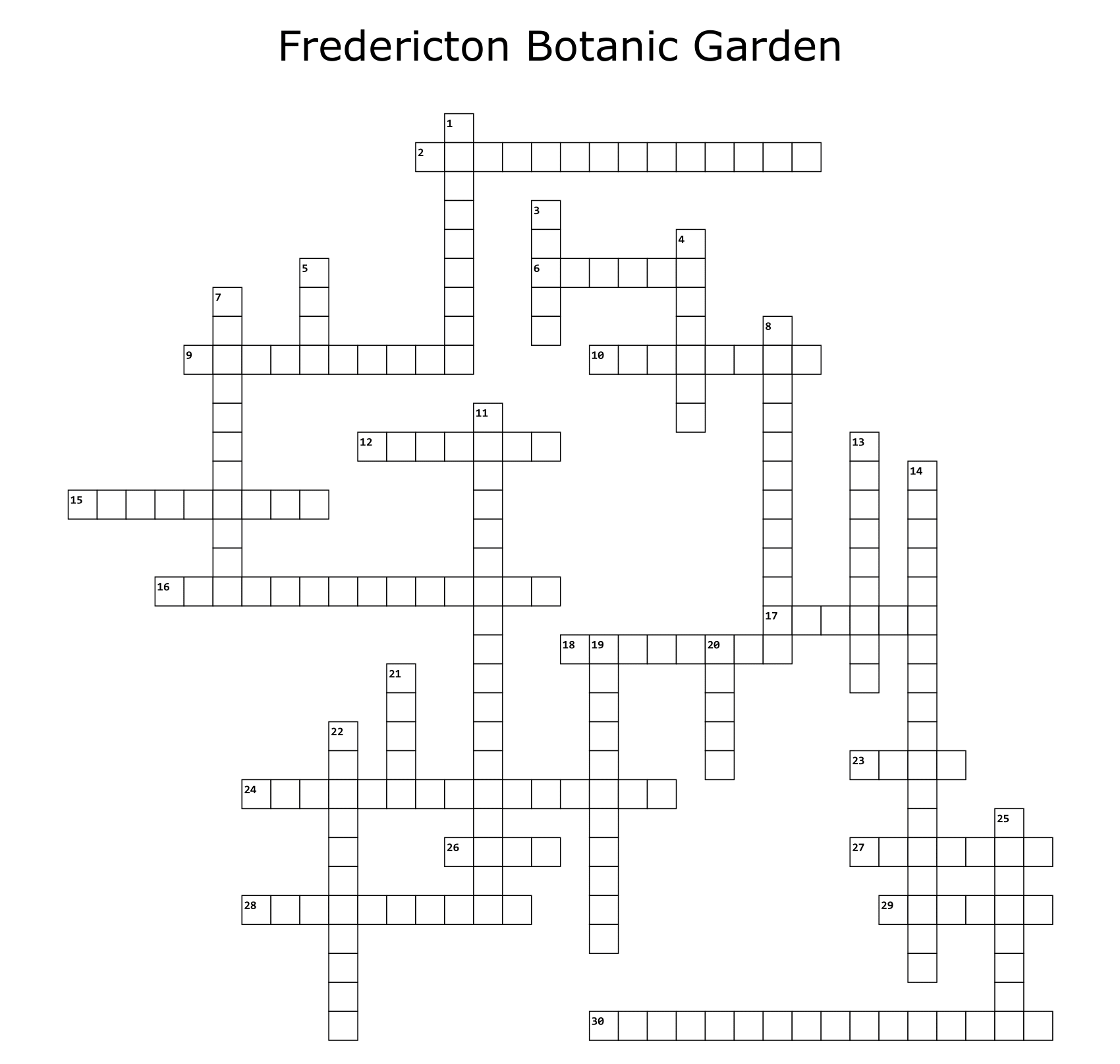
Across
-
2. This is our new Chair.
6. A hand-held garden tool mainly used for digging or moving small amounts of soil.
9. The unceded land we are on.
10. It is a good idea to wear this to avoid attracting mosquitoes in the forest.
12. This was performed in a promenade-style production by Bard in the Barracks this summer.
15. The Resource Centre is a _____-free zone.
16. Heather Connors-Dunphy is one of these, and Erin MacQuarrie is a candidate.
17. These are sold for $10 at the Resource Centre, but you can also occasionally win one for free at Weeding Wednesday.
18. This person was one of the founders of the FBGA, as well as AIDS NB and several other formations, and has a memorial garden named after him.
23. The price of entering and viewing the gardens.
24. The _____ Committee oversees on-the-ground activities of the garden, such as garden bed design, trail development, and invasive species control.
26. Most inquiries can be sent to _____@frederictonbotanicgarden.com.
27. The starting rate is $200 to host this kind of event at the Garden.
28. This weed, also known as Couch Grass, is an invasive plant native to Eurasia and Africa. (It is commonly used for erosion control, but its rhizomous nature means it easily overtakes many native species.
29. This type of plant, unlike a perennial, grows, blooms, produces seeds for more plants, and dies within a year.
30. CBC Information Morning is making a series about this location, guided by Stephen Heard.
Scroll down for crossword answers. |
|
|
Down
-
1. This person hand-crafted several garden accessories from cedar, such as bee hotels and chickadee nesting boxes.
3. These creatures are known for their attraction to light, and they also can be effective pollinators.
4. The Latin name of this flower is Lobularia maritima.
5. This flower shares its name with part of your eye.
7. At the Garden, you can take as many of these as you want.
8. We have been including more of these in the Garden and in Plant Sales, such as Amelanchier canadensis (Serviceberry) and Asclepias incarnata (Swamp Milkweed).
11. The Garden has been developing this website as a guide to this province’s flora.
13. This trail begins just below Memorial Grove and follows a small stream.
14. Caoife Garvey, Gary Crosby, Neomi Iudit, and Kim Stillwell are our _____ this summer.
19. This year is the FBGA’s 35th _____.
20. We partnered with this organization for a Guided Walk and a Plant ID Tour.
21. With variants such as citriodorus and vulgaris, we had a lot of this herb at our plant sales.
22. The _____ will include several sites in which Garden staff and volunteers will grow plants for the purpose of collecting and distributing their seeds in coming years.
25. Non-native plants that spread rapidly and negatively impact the local ecosystem.
|
|
|---|
|
The Fredericton Botanic Garden Association Newsletter is published by the Fredericton Botanic Garden Association, Inc. The FBGA is a registered charitable organization. The objectives of the FBGA are to guide the establishment of the Fredericton Botanic Garden and to foster an awareness and appreciation of plants. For information regarding membership and to become involved, please contact us.
Email: info@frederictonbotanicgarden.com
Phone: (506) 452-9269
Address: 10 Cameron Court, Fredericton, NB E3B 2R9
Website: frederictonbotanicgarden.com
Charitable registration number: 13881 4876 RR0001
Board of Directors
Michael Stastny, Chair
Jay Chapman, Secretary
Julie Wright, Treasurer
Steve Heard, Past Chair
Bronwen Cunningham
Joanna Mills
Becca Ireland
Anthony Brooks
Valerie Sensinger
Mark Hazlett
Ainslee MacMillan
Executive Director: Linda Stephenson
Administrative Assistant & Seed Orchard Coordinator: Erin MacQuarrie
Head Gardener: Mujin Lee
|
|
|---|
|
Across
- 2. michaelstastny
6. trowel
9. wolastoqey
10. bugspray
12. macbeth
15. fragrance
16. mastergardener
17. tshirt
18. halhinds
23. free
24. sitedevelopment
26. info
27. wedding
28. quackgrass
29. annual
30. literaturegarden
|
|
|
Down
- 1. vicdunphy
3. moths
4. alyssum
5. iris
7. photographs
8. nativeplants
11. newbrunswickplants
13. creekside
14. artistsinresidence
19. anniversary
20. nbisc
21. thyme
22. seedorchard
25. invasive
|
|
|---|
|
|
|  |
|
|
| |
|
|